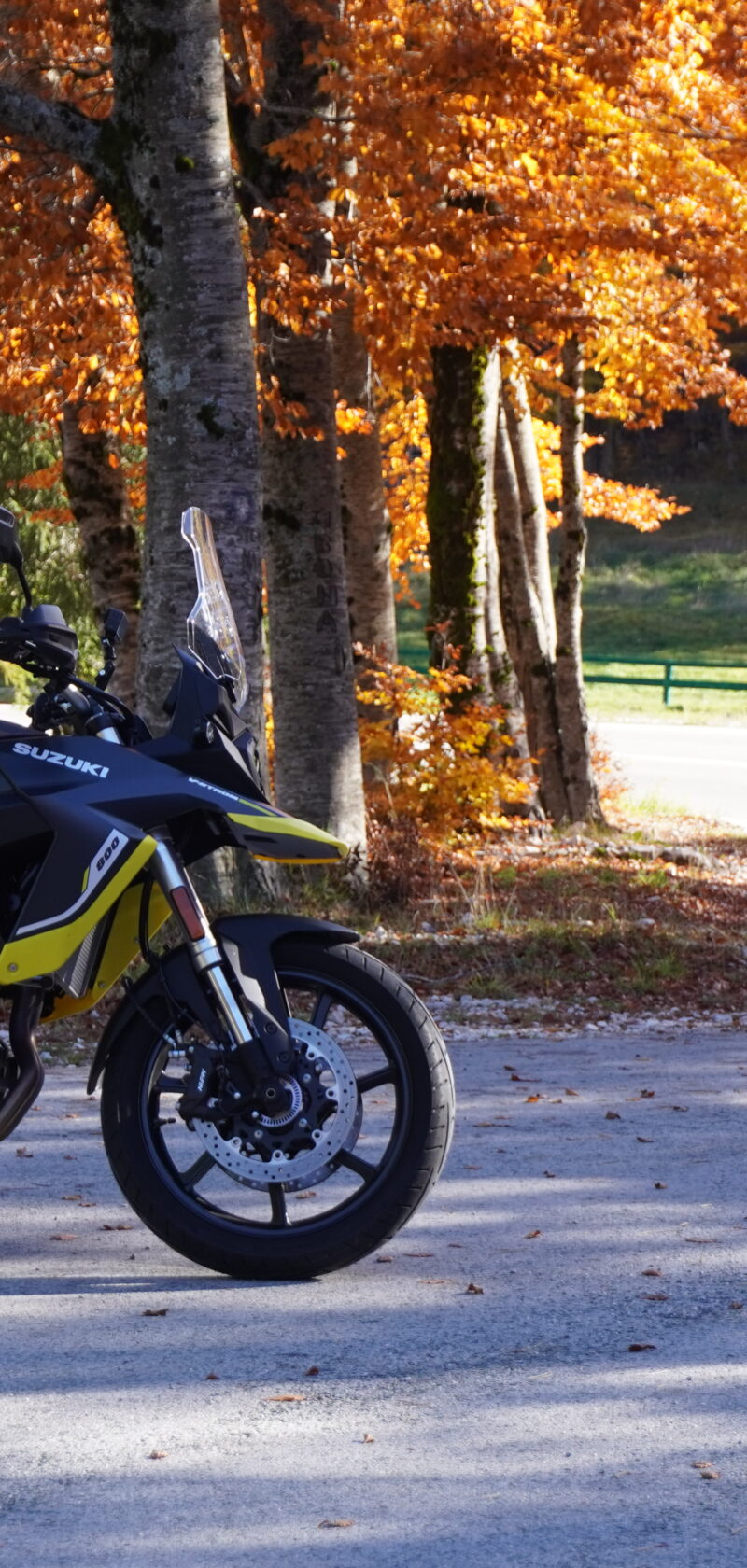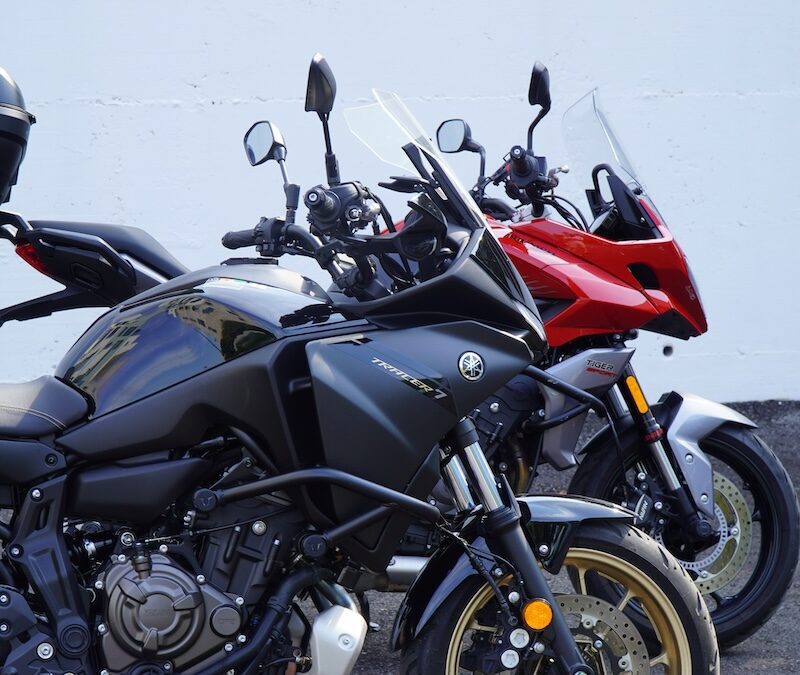

After spending time riding both the Yamaha MT‑09 and the Yamaha Tracer 9 GT+, in the city and outside of town, I noticed something that didn’t immediately make sense. Both motorcycles use the same Yamaha Y-AMT system. Same engine platform. Same transmission hardware. Yet the riding experience was noticeably different.
At first, this felt confusing. If the gearbox is the same, why does it behave so differently? That question led me to dig deeper — and what I found explains why Y-AMT is often misunderstood.
Y-AMT Is Not a Standalone System
Y-AMT is frequently judged as a single piece of technology: “Is the gearbox smooth or not?”. But this is the wrong way to look at it. Y-AMT is not a standalone system. Its behavior changes significantly depending on the motorcycle and the electronic ecosystem around it. This is why judging Y-AMT after riding only one bike can easily lead to the wrong conclusion.
A Short Historical Context
Honda is often used as a reference point when discussing automatic motorcycle transmissions, largely because it pushed the concept strongly into the mainstream and expanded it across multiple models. But Yamaha is not new to this idea.
Back in 2006, Yamaha introduced YCC-S on the FJR1300 — a clutchless shifting system designed for long-distance touring. It preserved a mechanical gearbox feel while reducing rider workload. At the time, Yamaha didn’t turn this into a full lineup strategy. It remained a niche, touring-focused solution, which is why many riders felt Yamaha disappeared from the automatic-transmission discussion.
Y-AMT is not a sudden experiment. It is a modern continuation of that philosophy, made possible by lighter hardware and much more advanced electronics.
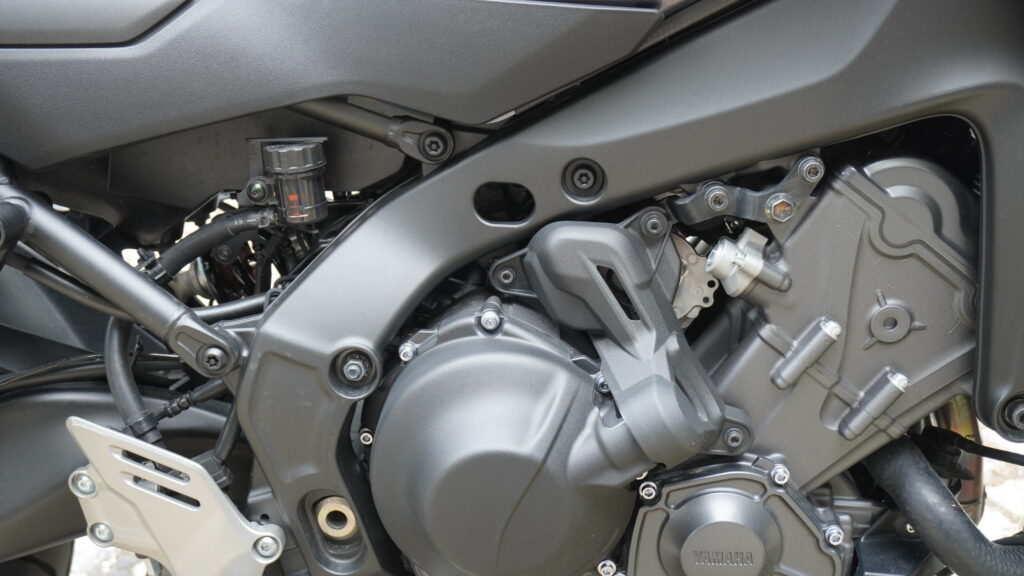
What Y-AMT Actually Is
Y-AMT is an automated manual transmission. Instead of replacing the gearbox:
-
Yamaha keeps a conventional manual gearbox
-
Adds electronic actuators for the clutch and gear shifting
-
Uses electronics to control when and how those actions happen
The result is a system that is:
-
lightweight
-
modular
-
relatively easy to install across multiple platforms
That’s why Y-AMT can be used on CP2 and CP3 engines, including MT and Tracer models, without redesigning the entire engine. And this modularity is also why some people ask: “Why put such a simple system on a flagship bike?”
That question only exists if Y-AMT is viewed in isolation.
Same Y-AMT, Different Experience
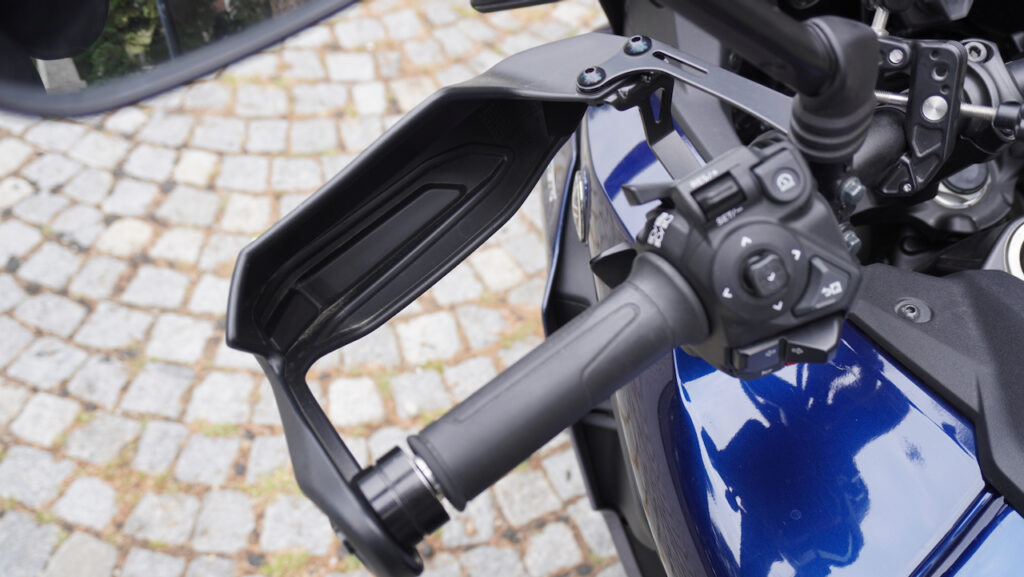
Y-AMT is the same system on both the MT-09 and the Tracer 9 GT+. But the experience is completely different. Why? Because on the Tracer 9 GT+, Y-AMT is not working alone. It is part of a fully integrated electronic ecosystem — and this is what most people miss.
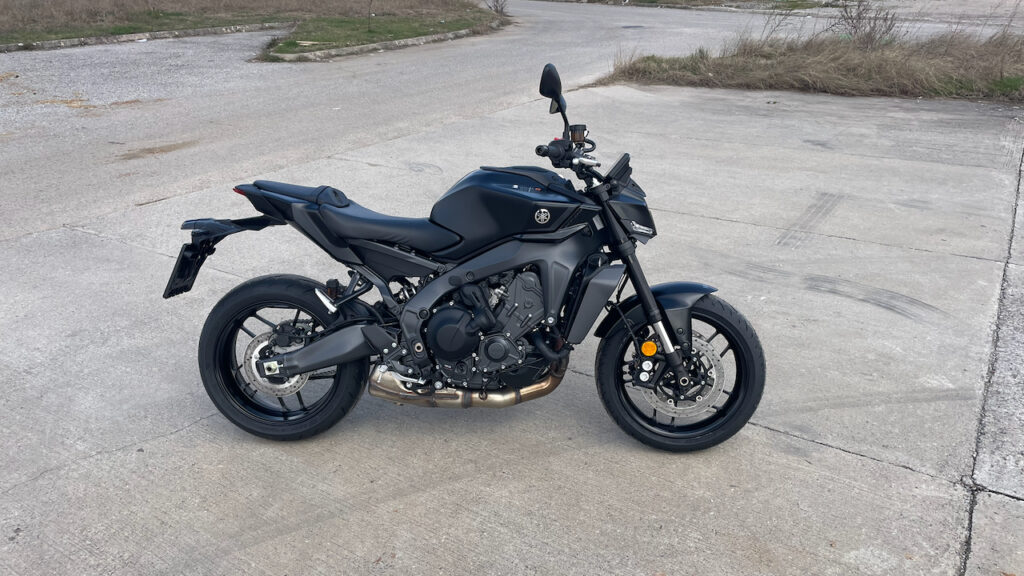
MT-09: Raw and Mechanical
On the MT-09, you have:
-
conventional suspension
-
fewer touring-oriented electronics
-
a more aggressive, sporty character
Here, Y-AMT feels:
-
more mechanical
-
sometimes abrupt, especially in lower gears
In automatic mode, gear choices can occasionally feel disconnected. In manual mode, however, it feels engaging, responsive, and natural. This is often where people stop and conclude: “Y-AMT is jerky. It’s not refined.” But that’s only half the story.
Tracer 9 GT+: Where Y-AMT Comes Together
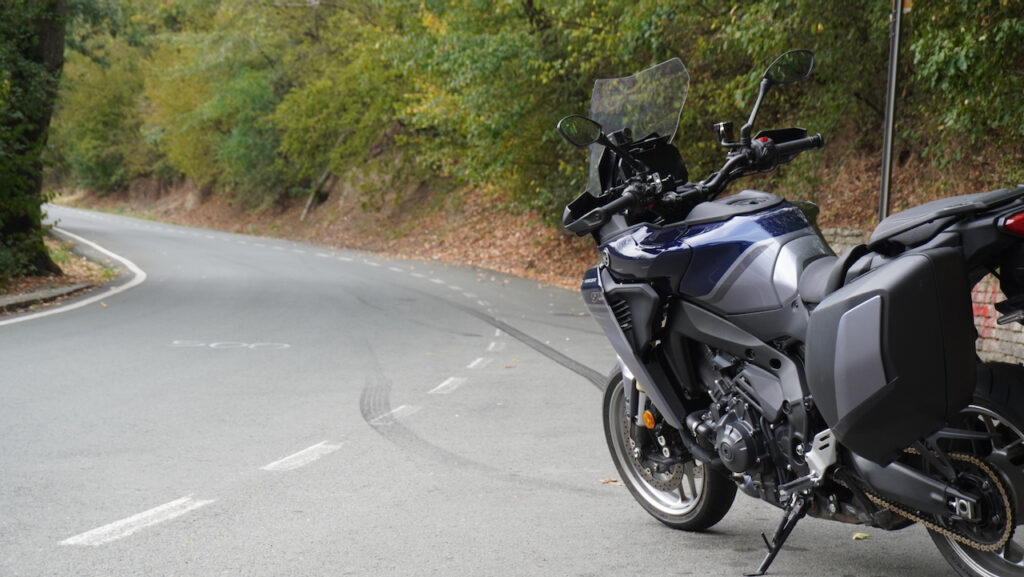
On the Tracer 9 GT+, Y-AMT is supported by several advanced systems working together.
Semi-Active Suspension (KYB KADS)
The Tracer 9 GT+ uses KYB semi-active suspension. During automatic gear shifts:
-
suspension damping is adjusted for milliseconds
-
body pitching is reduced
-
shift shock is softened
This alone makes Y-AMT feel dramatically smoother compared to the MT-09. Same gearbox. Same shift mechanism. Completely different result.
IMU and Back Slip Regulation (BSR)
The Tracer 9 GT+ also features an updated six-axis IMU with Back Slip Regulation. BSR manages rear-wheel behavior during engine braking, especially during downshifts. When Y-AMT downshifts:
-
engine braking is moderated electronically
-
rear-wheel stability is preserved
-
transitions feel calmer and more controlled
The MT-09 does not have this level of IMU-based rear-wheel control. That’s why the MT-09 feels more abrupt, while the Tracer 9 GT+ feels more composed — not because Y-AMT is different, but because the motorcycle around it is smarter.
Adaptive Cruise Control and Touring Logic
On the Tracer 9 GT+, Adaptive Cruise Control is also linked to Y-AMT. When ACC is active:
-
Y-AMT uses a dedicated shift strategy
-
unnecessary shifts are reduced
-
acceleration and deceleration are smoother
-
downshifts happen only when truly needed
The bike manages speed, distance, and gears together — exactly what you want on long rides.
Why Context Matters
This is the core point. Y-AMT on the MT-09 and Y-AMT on the Tracer 9 GT+ are not the same experience, even though the hardware is identical. On the Tracer 9 GT+, Y-AMT is supported by:
-
semi-active suspension
-
IMU-based rear-slip control
-
adaptive cruise control
-
touring-focused electronics
Together, these systems elevate Y-AMT into a next-level touring experience. Without this context, it’s easy to misunderstand why Yamaha uses Y-AMT on a flagship model. With context, the decision makes perfect sense.
Final Thoughts
There is no perfect transmission. Every system targets a different rider. Y-AMT is not trying to be something else. It is a manual automated transmission that:
-
preserves mechanical feel
-
reduces rider effort
-
scales with the level of electronics on the bike
On simpler motorcycles, it feels raw. On highly integrated platforms like the Tracer 9 GT+, it feels refined, calm, and addictive. Same system. Different ecosystem. Different result. And once you understand that, Y-AMT starts to make a lot of sense.