Choosing the right sport-touring tire can completely change how your motorcycle performs on long trips. Grip, durability, stability, and overall riding comfort all depend heavily on the tires you use.
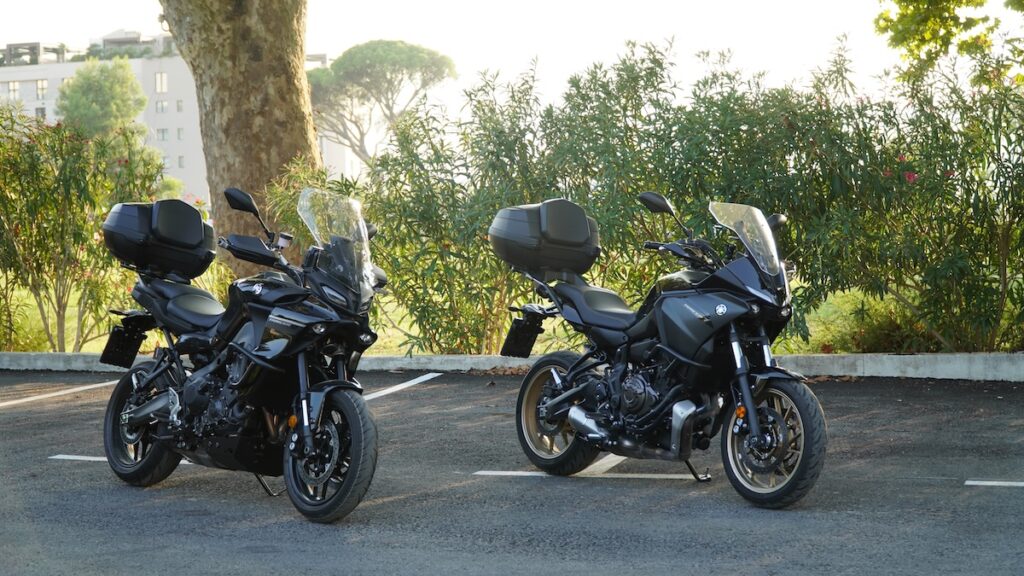
Over the past few years riding across Montenegro, Croatia, and Bosnia, we’ve tested many touring tires on motorcycles like the Yamaha Tracer 7 and Yamaha Tracer 9. After thousands of kilometers in different conditions, a few practical lessons became very clear.
This article explains the difference between GT and non-GT touring tires, how they perform in real riding conditions, and which type of tire works best depending on your motorcycle.
OEM Tires vs Aftermarket Tires
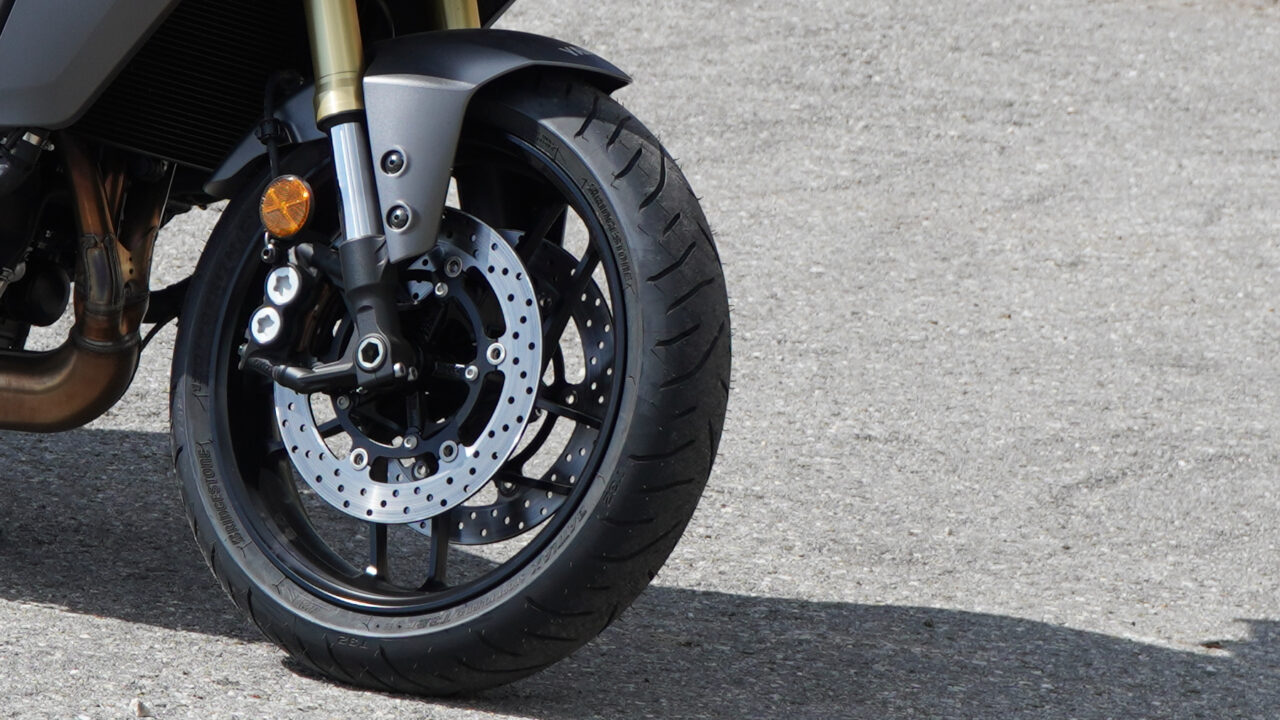
Many motorcycles leave the factory with good tires, but they are not always the best choice for long-distance touring. For example, the Yamaha Tracer 9 usually comes with Bridgestone T32 tires. These tires provide good grip and stability when new, but in our experience they typically last around 6,000 kilometers in touring conditions.
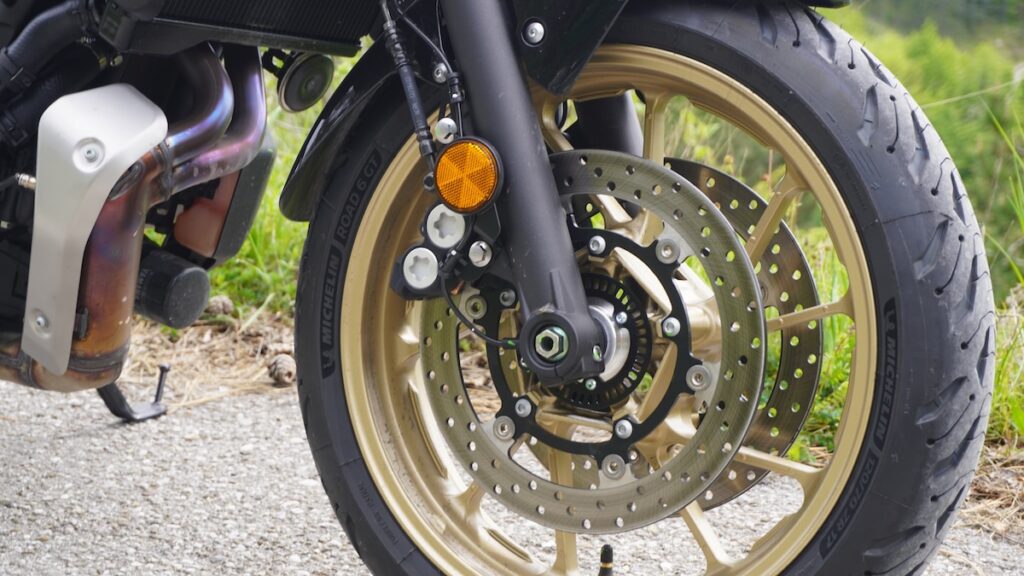
The Tracer 7, on the other hand, often comes with Michelin Road 6 or Road 6 GT tires, which usually last closer to 10,000–11,000 kilometers. However, once we started replacing OEM tires with aftermarket touring tires, we noticed that they often performed better and lasted longer, even when the tire model was technically the same.
This happens because manufacturers sometimes install slightly different tire specifications for factory fitment compared to what riders buy in the aftermarket.
Types of Road Motorcycle Tires
Before choosing a tire, it helps to understand the main categories.
Sport / Road Tires
Sport tires are designed for aggressive riding and quick warm-up. They are usually softer and provide excellent grip, but they wear faster and are not designed for long touring distances.
Touring / Sport-Touring Tires
Sport-touring tires are designed for longer rides and mixed conditions.
Most modern touring tires use dual-compound construction, meaning:
• the center of the tire is harder for durability
• the sides are softer for cornering grip
This allows riders to enjoy twisty roads while still maintaining good mileage.
Adventure Touring Tires
Adventure touring tires are designed for motorcycles that ride both on asphalt and light gravel roads. These tires balance road performance with off-road capability. For motorcycles like the Tracer series, sport-touring tires usually provide the best balance between performance and durability.
Why Touring Tires Work Well in the Balkans
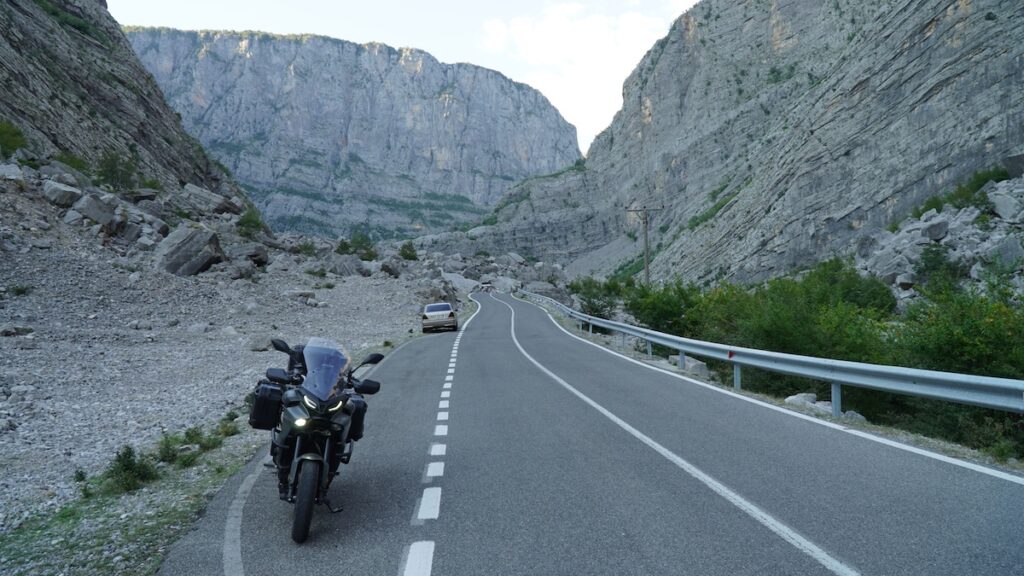
The Balkans provide extremely diverse riding conditions.
In one day of riding you can experience:
• smooth coastal asphalt
• mountain serpentines
• older tarmac surfaces
• occasional gravel or rock debris
Touring tires must provide strong grip for cornering, but also enough durability to handle long riding distances. Another important factor is temperature change. For example, in spring or autumn the temperature on the coast might be around 20°C, while mountain areas can drop to 5°C or lower. Tires must perform reliably across this range of temperatures. This is exactly where sport-touring tires perform best.
GT vs Non-GT Motorcycle Tires
Many touring tire models come in two versions:
• standard version
• GT version
Examples include:
• Michelin Road 6 and Road 6 GT
• Pirelli Angel GT series
GT tires are designed for heavier motorcycles, especially those used for long-distance touring with luggage or passengers.
They typically include:
• reinforced carcass construction
• higher load capacity
• improved stability at high speed
The Interesting Case of the Yamaha Tracer 7
One interesting example is the Yamaha Tracer 7, which often comes from the factory with GT tires, even though it is a relatively light motorcycle. This sometimes creates confusion because many riders believe GT tires should only be used on heavier bikes. In reality, GT tires can be used on lighter motorcycles as well. However, because they are designed for heavier loads, they may warm up slightly slower and sometimes feel less responsive compared to standard versions.
What Happens When You Use the Wrong Tire
Through our touring experience we noticed a clear pattern.
Non-GT Tires on Heavy Motorcycles
When non-GT tires are used on heavier bikes like the Tracer 9, especially with luggage or passengers, they tend to:
• flatten faster in the center
• wear more quickly
• become more vulnerable to punctures
Because of this, GT tires usually perform much better on heavier touring motorcycles. GT Tires on Lighter Motorcycles GT tires can absolutely work on lighter motorcycles. In fact, they may last longer. However, if you replace tires frequently for performance reasons, you may never fully use their durability advantage.
Tire Lifespan and Heat Cycles
Tire performance does not depend only on mileage. Another important factor is heat cycles. Every time a tire heats up during riding and then cools down again, the rubber compound slowly changes. Over time this reduces grip, particularly in wet or cold conditions. Even if a tire still has visible tread, its performance may already be reduced. For most touring tires, the optimal performance window is roughly the first 70–80% of their lifespan. For example, a tire capable of lasting 10,000–12,000 km may deliver its best performance during the first 7,000–9,000 km.
Our Touring Tire Strategy
After years of riding and testing different tires, we developed a simple approach.
Lighter sport-touring motorcycles – Regular sport-touring tires work very well and provide excellent grip.
Heavier touring motorcycles – GT tires are usually the better option because they provide additional durability and stability under load.
Final Thoughts
The most expensive tire is not always the best tire for your motorcycle.
The right choice depends on:
• motorcycle weight
• riding style
• riding conditions
• annual mileage
If you ride lighter sport-touring motorcycles, standard touring tires often provide excellent performance. For heavier touring motorcycles, especially when carrying luggage or passengers, GT tires are usually the better choice. Finding the right balance between grip, durability, and real-world performance is what matters most when choosing a touring tire.