Is the sport-tourer finally making a comeback? I’ve just returned from EICMA in Milan — the place where motorcycle manufacturers show what’s coming next. And to be honest, this year wasn’t the most exciting one. There were no huge surprises and very few all-new models.
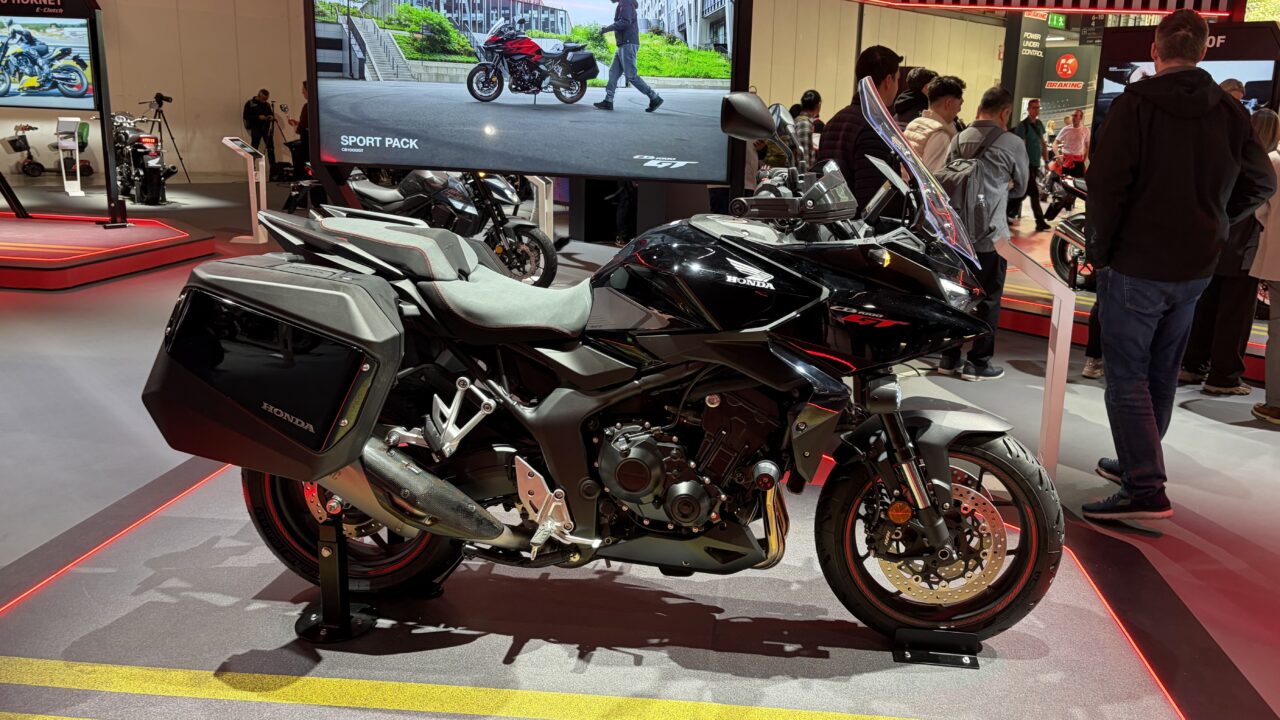
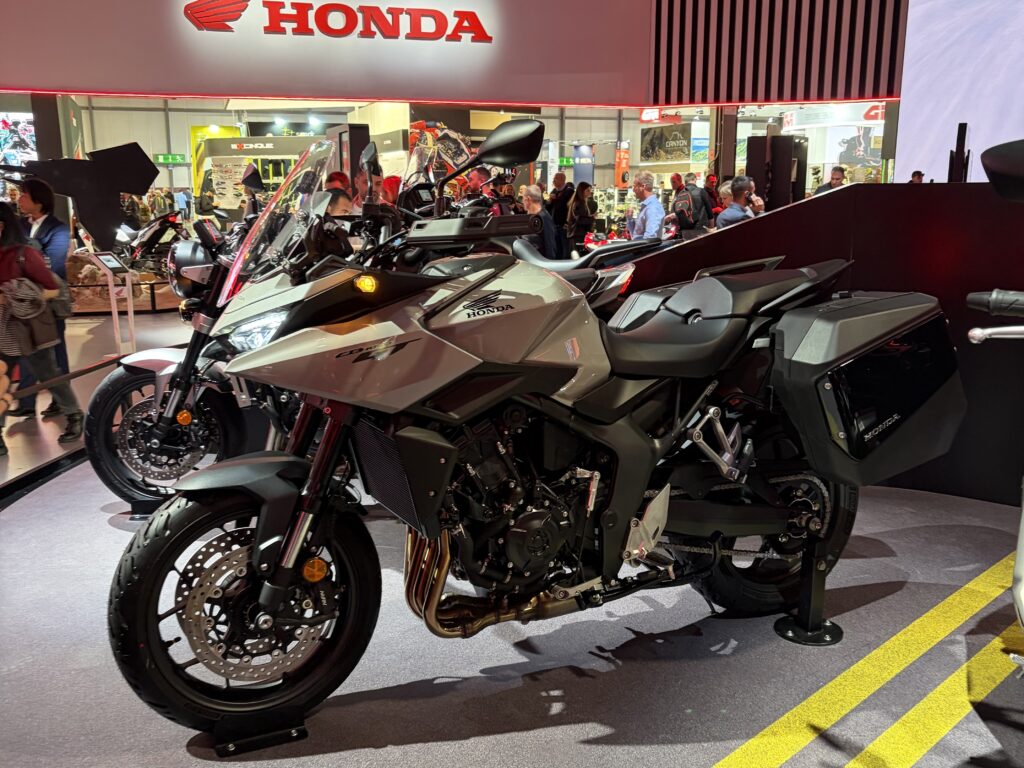
But one motorcycle did catch my attention: Honda CB1000GT.
As someone who has spent years riding and reviewing sport-touring bikes, Honda releasing a proper sport-tourer — not an ADV, not a crossover, not a full-on tourer — is already something worth talking about.
The return of the sport-tourer?
For almost a decade, the adventure segment completely dominated the market. Big ADV bikes everywhere — and meanwhile, classic sport-tourers quietly disappeared. But lately, something has changed. Manufacturers are clearly bringing back touring versions of their sporty platforms:
-
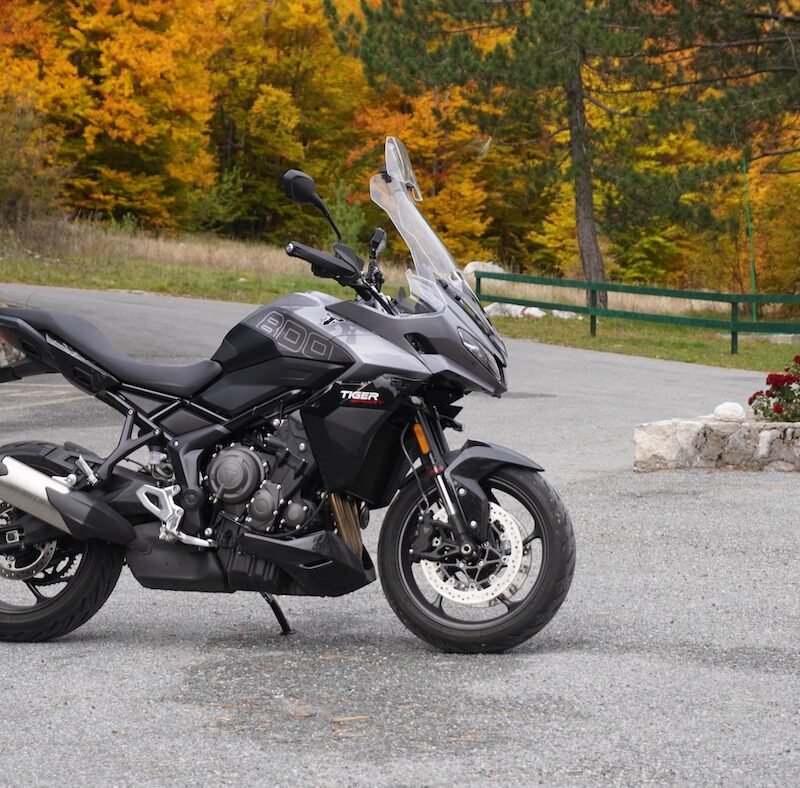
Triumph expanded the Tiger Sport lineup
-
Kawasaki refined its Ninja-based tourers
-
Suzuki introduced the GSX-S1000GT and GX
-
Yamaha’s Tracer line continues to set the benchmark
Now Honda has looked at its lineup, noticed a clear gap, and built the CB1000GT based on the new CB1000 Hornet platform. That alone tells us something: Honda believes this segment matters again.
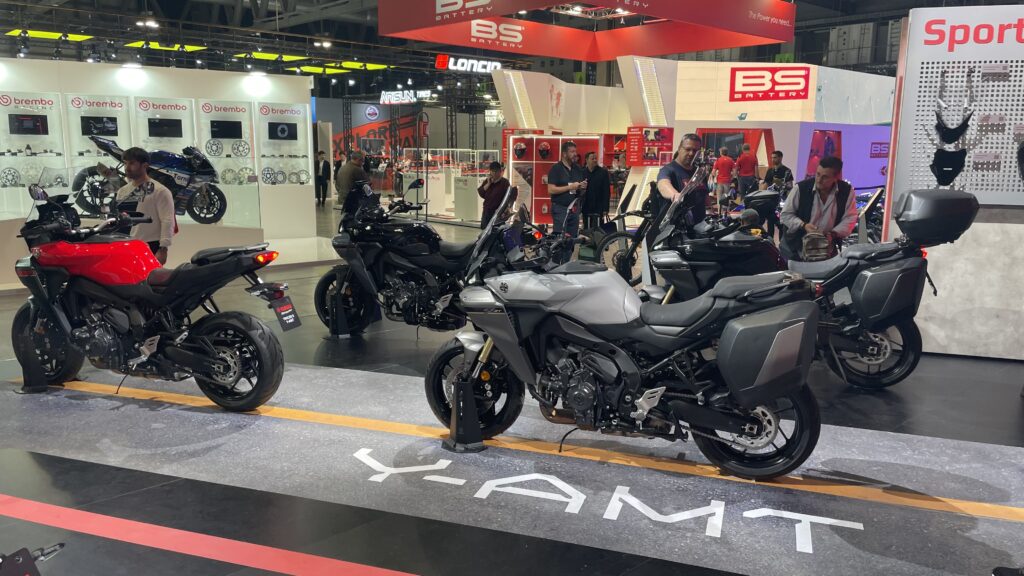
Naturally, it will be compared to the Tracer 9 GT
Like it or not, the CB1000GT will be compared to the Yamaha Tracer 9 GT. And for me personally, the Tracer is a very clear reference point — I ride Tracers a lot, both privately and in my business. This is not a full comparison. These are just first impressions that help understand Honda’s direction.
Where Honda saved money — and where it didn’t
Honda is very good at reusing platforms and components to keep prices competitive. And on the CB1000GT, some elements definitely feel more budget-oriented:
-
Tubular steel frame
-
Welded subframe
-
Basic-looking main dashboard
-
Fully manual windscreen adjustment
-
No Apple CarPlay or Android Auto (which the NT1100 and Africa Twin do have)
-
Even the pannier mounting system looks simpler than what Yamaha offers on the Tracer 9 GT
At first glance, that might sound disappointing. But here’s the important part.
Honda spent money where it actually matters
The CB1000GT comes with fully electronically controlled Showa suspension (EERA). You select a riding mode — and the bike adjusts everything for you. Interestingly, even on the Tracer 9 GT and GT+, some suspension elements still require manual adjustment, despite those bikes being excellent overall. This tells me something very clearly:
Honda is being smart. They save money where it doesn’t really affect the riding experience — and invest where the rider actually feels the difference. The CB1000GT isn’t overloaded with flashy tech, but some of the fundamentals are absolutely right.
Power numbers vs engine character
On paper, the CB1000GT looks impressive. It has roughly 30 horsepower more than the Tracer 9. But engine character matters more than numbers.
Honda’s inline-four loves high RPM
-
Smooth
-
Fast
-
Excellent for long highway riding
-
Usually less exciting at low revs and in tight corners
Yamaha’s CP3 triple
-
Strong torque down low
-
Punchy and playful
-
Brilliant on twisty roads
-
Makes the bike feel alive almost everywhere
So yes — the Honda is more sport-oriented, while the Yamaha is more about fun and versatility. And it’s worth remembering: Honda already has the NT1100 for riders who want a pure touring machine. That places the CB1000GT neatly between sporty and touring in Honda’s lineup.
Final thoughts: a shift is happening
Honda entering this segment again is not an accident. It means they see real potential. I also believe the big ADV class is slowly drifting toward road-focused touring anyway. Many riders want:
-
Comfort
-
Practicality
-
Sporty handling
…not hardcore off-road capability. So maybe — just maybe — sport-tourers are finally coming back.
What do you think?
How do you feel about the Honda CB1000GT? Would you still choose a Tracer? Or Suzuki, Kawasaki — or something else entirely?