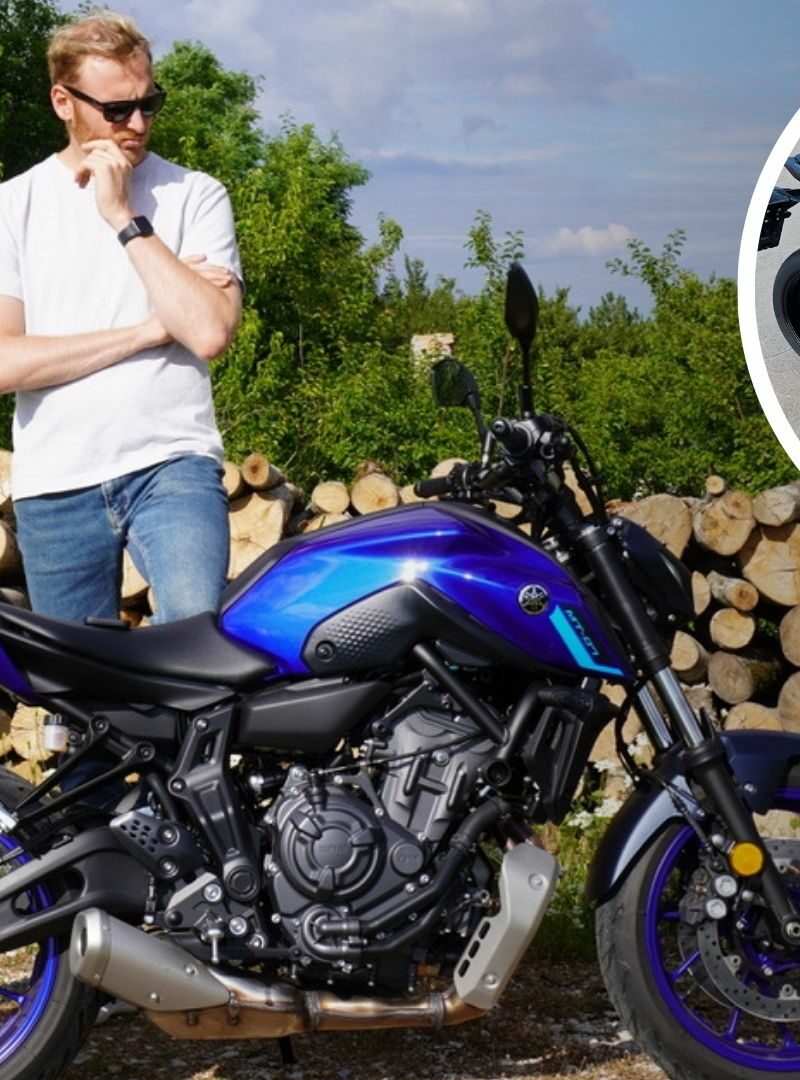
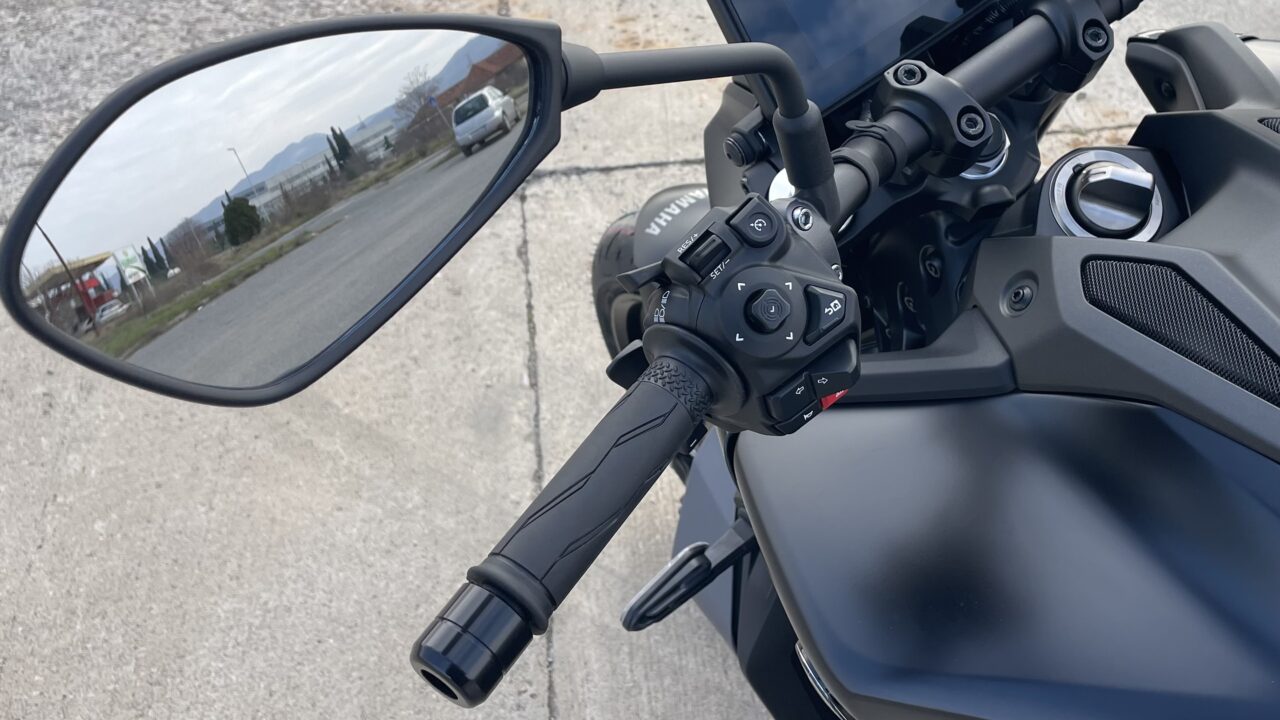
With the automatic version of the Yamaha MT‑09, Yamaha doesn’t just introduce a new transmission. You also get a few additional features, such as keyless access, a keyless fuel cap, and self-cancelling indicators — small details, but ones that add to everyday convenience.
In this article, I want to talk specifically about Yamaha Y-AMT (Yamaha Automated Manual Transmission) — a technology Yamaha is slowly rolling out across its motorcycle lineup.
I’ll share my real riding experience and answer some key questions:
-
Is this the future of motorcycle transmissions?
-
Should you consider switching to Y-AMT?
-
How does it actually feel to ride?
-
Do you still get the full motorcycle experience?
What Is Yamaha Y-AMT?
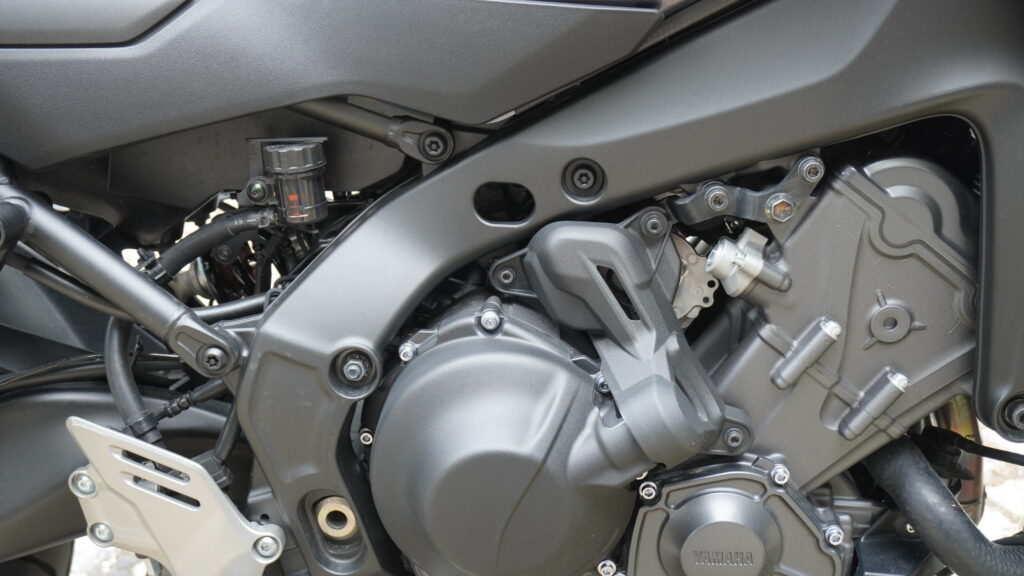
Y-AMT stands for Yamaha Automated Manual Transmission. At its core, it is still a manual gearbox, but with:
-
an automated clutch
-
and automated gear-shifting operations
This means:
-
no clutch lever
-
no traditional foot shifter
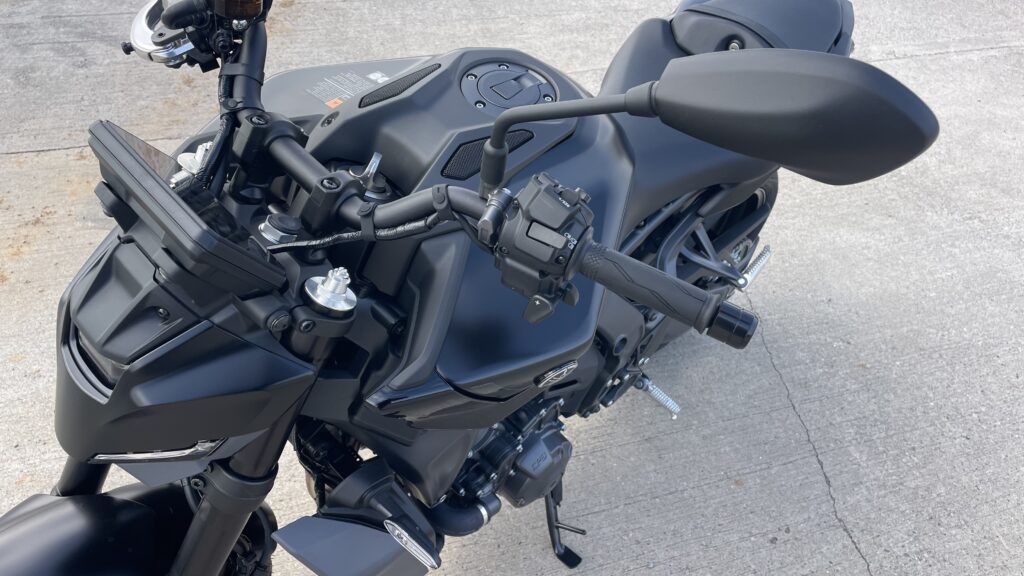
Instead, Yamaha handles clutch engagement and gear changes electronically. You control upshifts and downshifts using plus and minus buttons on the left handlebar, and you can also switch the bike into a fully automatic mode if you prefer. So while it shifts for you, the gearbox itself remains mechanical — not a fully automatic transmission in the traditional sense.
Riding Modes: Manual and Automatic
Y-AMT gives you flexibility in how you ride.
In automatic mode, you can choose between:
-
D mode – calmer, smoother shifting
-
D+ mode – more aggressive behavior and quicker responses
Switching to D+ also adjusts the bike’s electronic aids, such as traction control, slide control, and lift control, allowing for a sportier riding style.
When you switch to manual mode, you gain access to Yamaha’s familiar ride modes:
-
Street
-
Sport
-
Rain
-
Custom 1
-
Custom 2
Each mode adjusts power delivery and electronic safety systems, and the custom modes allow you to fine-tune the bike exactly to your preference. In manual mode, you still shift using the buttons — but you decide when every gear change happens.
How Y-AMT Works (Simply Explained)
Many riders are confused about how Yamaha’s system differs from other “automatic” motorcycles. Here’s the simple explanation:
-
Where you would normally have a gear lever, Yamaha installs an electronic shifting actuator
-
Where you would normally have a clutch cable, Yamaha installs an electronic clutch actuator
The gearbox itself doesn’t change. What changes is who does the work — you, or the electronics. That’s why Y-AMT behaves differently from systems like Honda’s DCT.
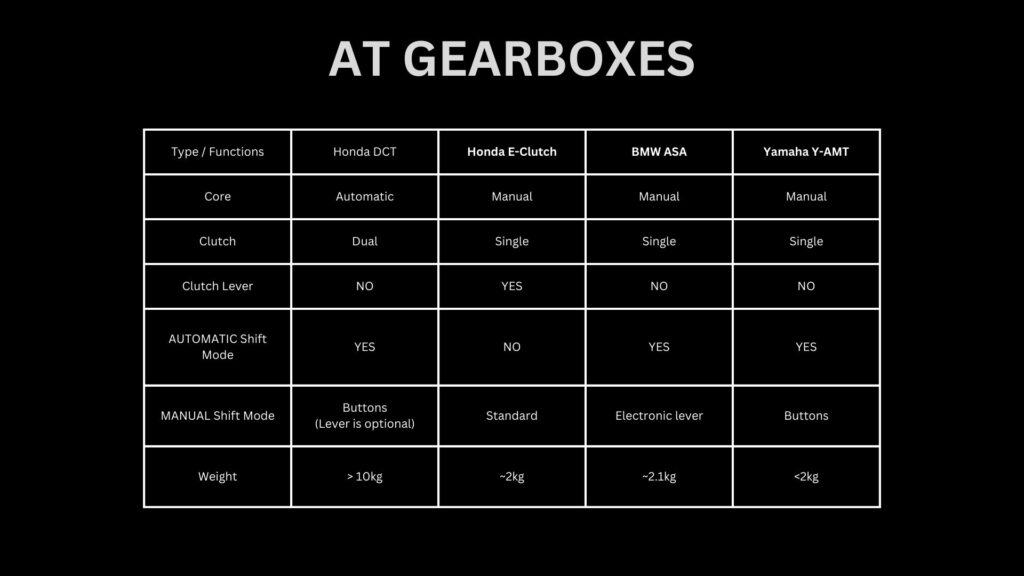
Y-AMT vs Other Automated Transmissions
Today, three major brands offer some form of automated shifting:
-
Honda – DCT and E-Clutch
-
BMW – ASA (Automated Shift Assist)
-
Yamaha – Y-AMT
The key difference:
-
Honda DCT is a fully automatic dual-clutch transmission
-
BMW ASA and Yamaha Y-AMT keep a manual gearbox and automate the process
Honda’s E-Clutch sits somewhere in between — it removes the need to use the clutch, but you still shift gears yourself. Y-AMT is often mistaken for a DCT-style automatic, but it’s not. It’s closer to a very advanced, automated manual gearbox.
Riding Experience: City, Traffic, and Everyday Use
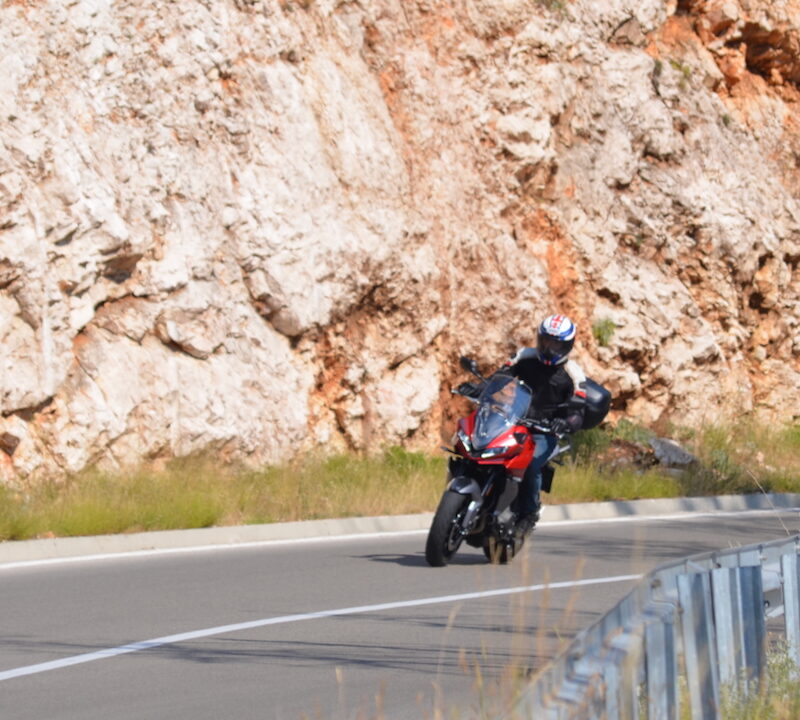
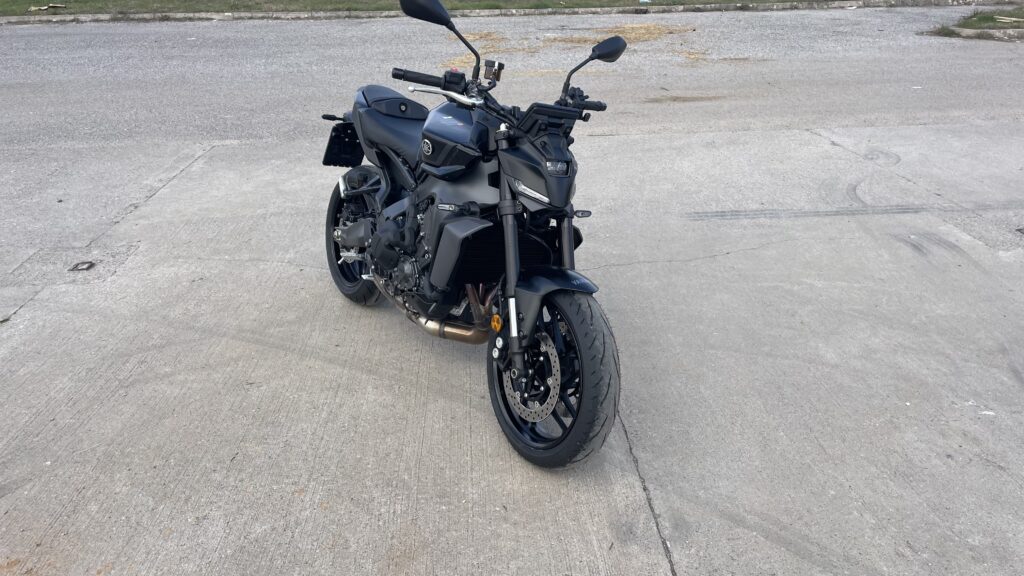
To properly test Y-AMT, I spent most of my time riding in city traffic, which is arguably the most demanding environment for any transmission. The Yamaha MT‑09 is one of Yamaha’s most versatile models — suitable for commuting, twisty roads, track days, and even light touring — making it a logical platform for debuting Y-AMT.
Because it’s winter in Montenegro, I couldn’t test the system in every condition, but I’ll definitely revisit it in spring.
Automatic Mode Impressions
-
Shifting is generally smooth
-
You do feel slight jerks between gears
-
Not annoying, but noticeable
-
Gear selection is always correct
-
Acceleration is good, though downshifts can have small delays
The slip-assist clutch does a good job of minimizing harsh feedback.
Manual Mode Impressions
In manual mode:
-
Shifts are extremely fast
-
Faster and more precise than most riders could achieve themselves
-
Even quicker than a traditional quickshifter
While manual mode would be great for track days or aggressive riding, I personally found automatic mode good enough that I didn’t feel the need to switch back.
Does It Still Feel Like a Motorcycle?
This is the most important question. Even though Yamaha calls it an automated manual transmission, it still feels like a manual gearbox. You simply do less work. The bike:
-
engages the clutch faster and more smoothly than most riders
-
shifts with speed and precision
-
still has small imperfections and delays — just like a manual transmission
And that’s intentional. Yamaha clearly wanted to preserve rider engagement and fun, rather than chase the ultra-smooth, car-like feel of a DCT. If you’re worried about losing the “soul” of riding — you shouldn’t. Y-AMT keeps the mechanical feel alive.
Starting and Riding: How It Works in Practice
Starting the bike is straightforward:
-
keyless access
-
turn the ignition
-
the bike asks you to select neutral
-
pull the brake and start the engine
To move off:
-
press the plus button to engage first gear
-
you can release the brake and gently roll the bike
-
apply throttle and ride away
It feels natural within minutes.
Where Y-AMT Makes the Most Sense
In my opinion, Y-AMT shines in several scenarios:
-
Touring bikes, such as the Yamaha Tracer 9 – reduced fatigue on long trips
-
City riding – less effort in stop-and-go traffic
-
Twisty roads – keeps the fun while reducing workload
My only real concern is long-term reliability, simply because more electronics are involved. That said, Yamaha has a strong track record when it comes to engineering durability.
Would I Go Back to a Manual?
Honestly? No.
After riding Y-AMT, I don’t see a strong reason to return to a traditional manual transmission.
Y-AMT offers:
-
the benefits of automation
-
without losing the manual riding experience
It doesn’t feel like a scooter or a car. It feels like a motorcycle — just easier to live with.
Final Thoughts
Y-AMT isn’t about replacing manual riding. It’s about reducing effort while keeping engagement. If this is where Yamaha is heading, it’s a direction that makes a lot of sense.
But now I’m curious — would you switch to an automated manual transmission for your next bike?