Which Is the Best Middleweight Sport-Tourer for Real Travel?
The middleweight sport-touring segment is growing fast — and for a good reason.
More riders today are looking for motorcycles that are lighter, more engaging, and more affordable than big adventure bikes, while still being serious enough for long-distance travel. Roads are improving everywhere, more places are paved, and many riders have realized something after the ADV boom: adventure bikes try to be everything, but they don’t really excel in one direction. And for most owners, they spend almost all of their time on asphalt.
That’s where modern sport-tourers and road-focused crossovers come in.
In this article, I want to compare four motorcycles that, in my opinion, define the middleweight sport-touring category in Europe:
-
Triumph Tiger Sport 660
-
Triumph Tiger Sport 800
-
Yamaha Tracer 7
-
Yamaha Tracer 9
This is not a spec-sheet or electronics comparison.
Instead, the focus here is on platforms, positioning, and real-world travel experience — especially from the perspective of long-distance riding.
You can travel on any motorcycle. But if you want a bike that is serious for travel, comfortable for long days, fun on twisty mountain roads, capable in town, and realistic to live with — these four stand out.
Why Sport-Touring Is Making a Comeback
For years, the default answer to motorcycle travel was a big adventure bike. Large engines, tall suspension, off-road capability “just in case.” But prices went up. Weight went up. Complexity went up. Today, a properly equipped big touring or adventure bike easily goes beyond €20,000. And once you add luggage, protection, and comfort accessories, you are already far above that.
At the same time, road infrastructure has improved significantly. Most riders travel on asphalt, ride mountain passes, serpentines, and scenic roads — not off-road trails. As a result, many riders are moving back toward road-focused touring machines that are lighter, more precise, more engaging, and simply make more sense for real travel. Yamaha never really left this segment. Kawasaki stayed there as well. But in recent years, Triumph returned strongly, and other brands followed.
When you look specifically at the 600–1000cc middleweight category, the picture becomes very clear: Yamaha Tracer and Triumph Tiger Sport are currently the strongest players.
What This Comparison Is (and Is Not)
This comparison is not about electronics, dashboards, or year-to-year updates. Electronics change quickly. Platforms last for years. The goal here is to understand:
-
which bikes are truly serious for long-distance travel,
-
how suspension, size, and ergonomics affect touring,
-
how these bikes feel after many hours and many kilometers,
-
and who each motorcycle is really built for.
The “On-Paper” Pairing
On paper, the pairing looks simple:
-
Tiger 660 vs Tracer 7
-
Tiger 800 vs Tracer 9
Similar engine sizes, similar power brackets. But in real life, these motorcycles behave very differently — because Yamaha and Triumph built their lineups with completely different philosophies.
Yamaha: Clear Hierarchy and Logical Progression
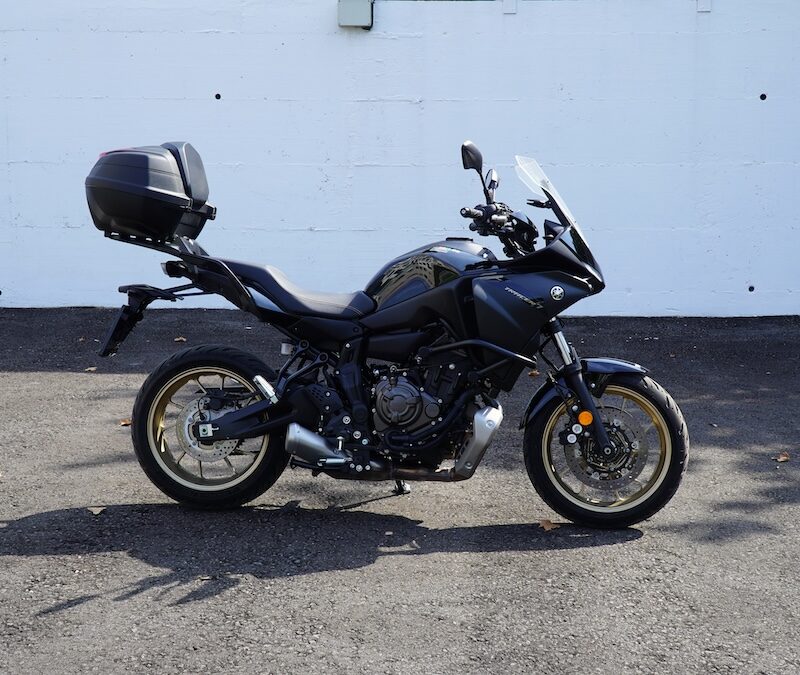
The Tracer 7 is the only twin-cylinder motorcycle in this comparison. It uses Yamaha’s well-known CP2 engine — and there is a reason why this engine appears in so many models. It is torquey, friendly, reliable, and easy to live with. Many people look at the Tracer 7 and assume it is a beginner-oriented bike. In reality, it is a serious touring motorcycle. After riding and testing this bike extensively — in heat, rain, cold, wind, on mountain roads, highways, and even some gravel — it becomes very clear why it works so well for travel:
-
fully adjustable suspension
-
center stand option
-
heated grips
-
proper luggage solutions
-
cruise control (on newer models)
-
and minimal but well-implemented electronics
It gives very honest mechanical feedback. It is easy to ride, but not simplistic. And build quality over time is excellent — no rattles, no loose panels, no unexpected wear. Tracer 7 is also a fantastic downsizing option for riders coming from larger motorcycles.
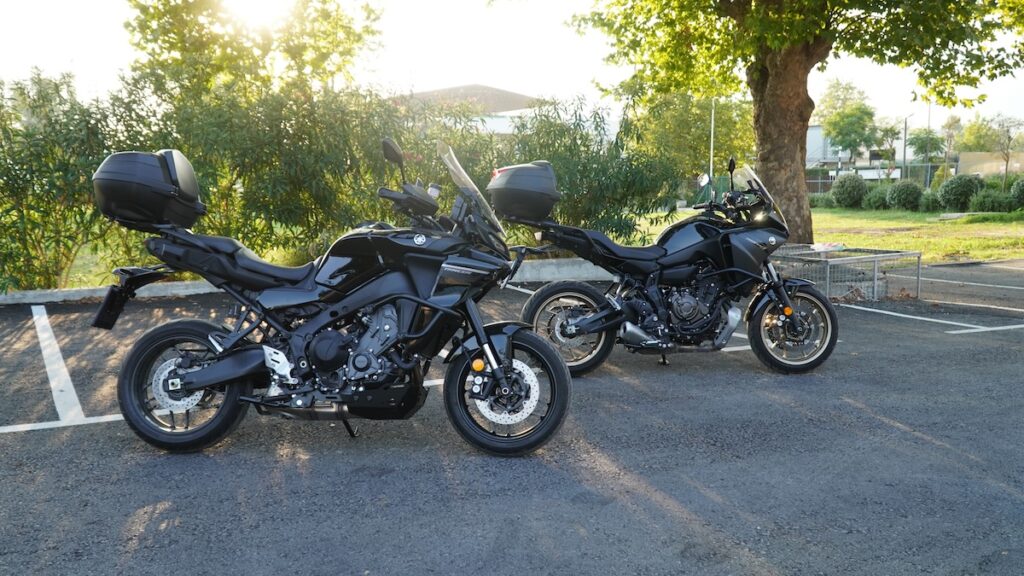
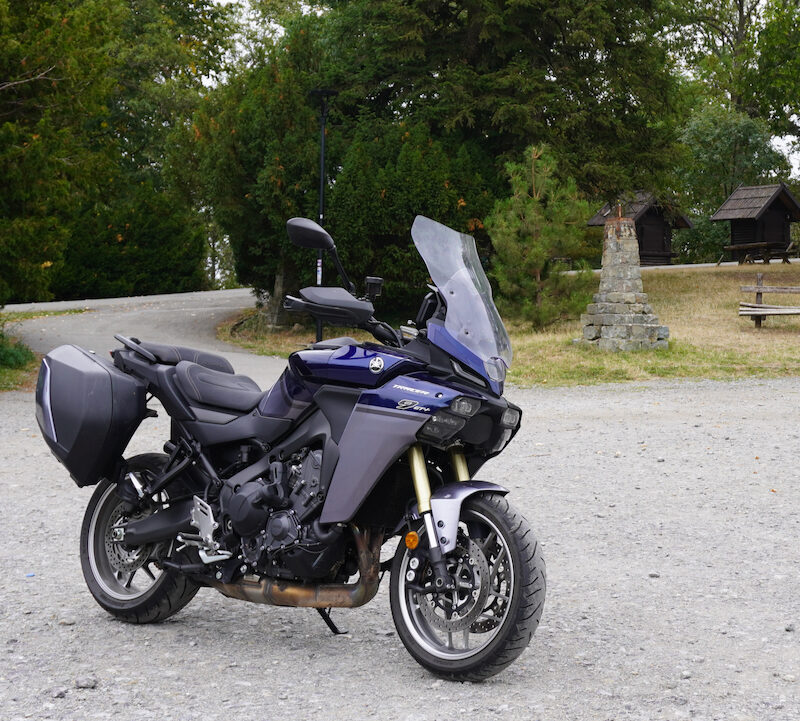
Yamaha Tracer 9
The Tracer 9 is not just a more powerful Tracer 7. It is a different platform. Different frame (Deltabox), triple-cylinder engine, larger dimensions, more weight, more stability. This bike clearly shines on:
-
long highway days,
-
two-up touring,
-
faster, more stable travel.
Yamaha created a very logical ladder: Tracer 7 → Tracer 9 Shorter, lighter, or older riders often prefer the Tracer 7. Taller riders, two-up travelers, and highway-focused riders naturally move toward the Tracer 9. Upgrade and downgrade paths make sense.
Triumph: Same Platform, Different Performance
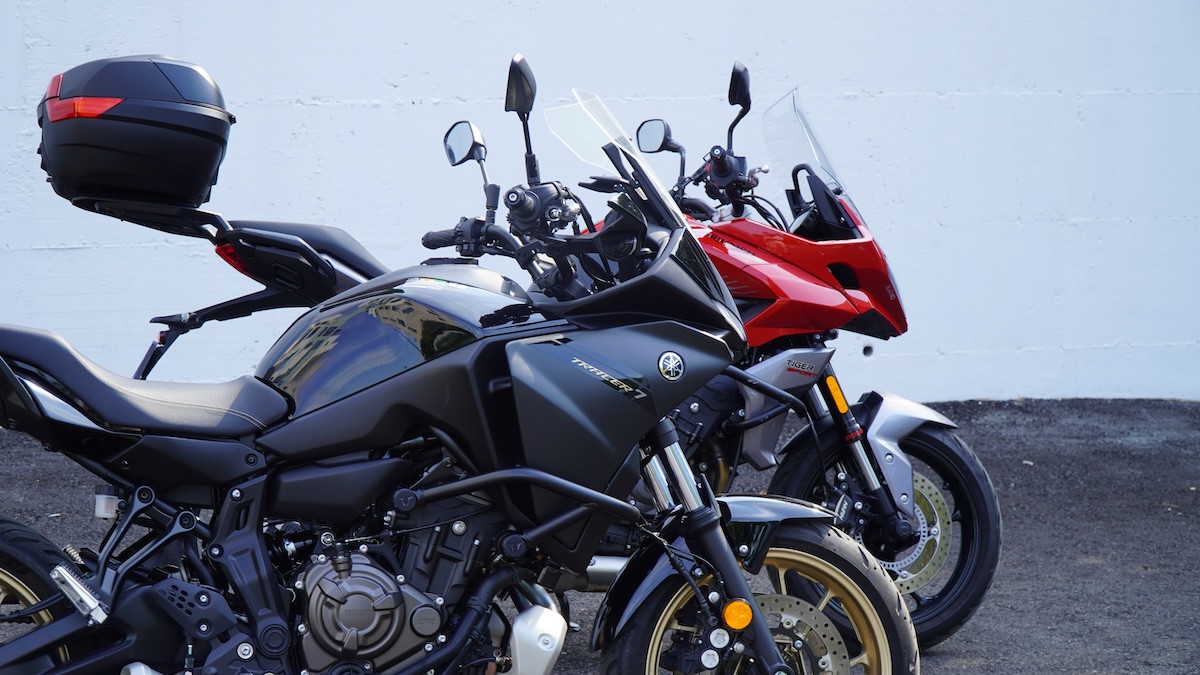
Triumph took a different approach with the Tiger Sport lineup. The Tiger 660 is a very attractive motorcycle. Design-wise, it looks premium and modern. The triple-cylinder engine is punchy, characterful, and fun — even experienced riders can enjoy it. However, from a touring perspective, there are some limitations. The Tiger 660 does not offer full suspension adjustability. For solo riding this might be fine, but for long-distance travel with luggage — or occasional two-up riding — suspension adjustability becomes important.
Another limitation is the lack of a center stand option. For a travel-oriented motorcycle, this is a noticeable omission, especially for chain maintenance and daily touring practicality. Build quality details also matter. Plastics feel cheaper, and early rattles can appear relatively quickly — not after years, but sometimes after weeks. The Tiger 660 is still capable of travel, but it feels more like a crossover that can tour, rather than a fully travel-focused machine.
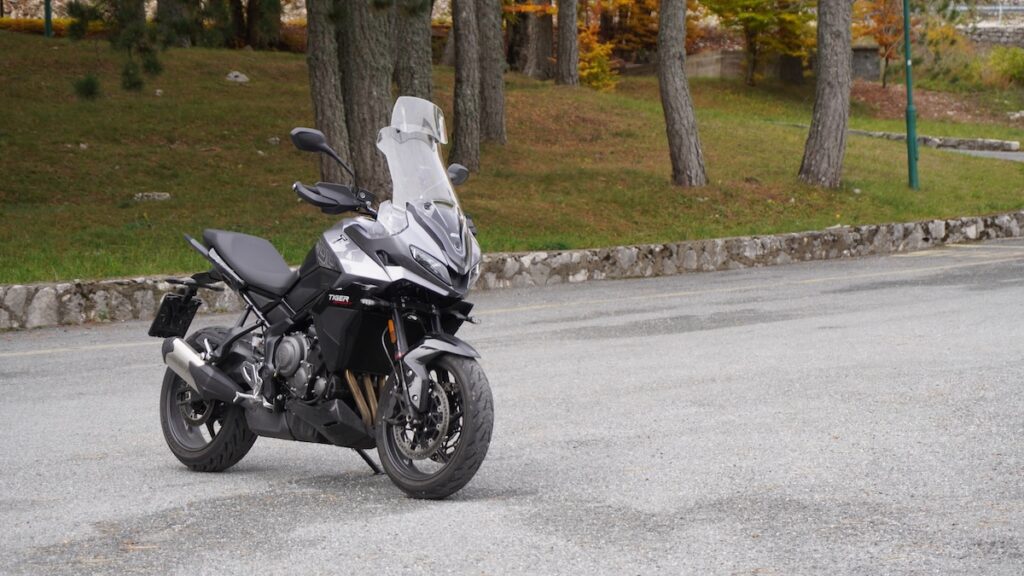
Triumph Tiger Sport 800
The Tiger 800 feels like what the Tiger should have been from the start. Better suspension, better brakes, more power — roughly on par with the Tracer 9. But here is the key difference: The Tiger 660 and 800 share the same platform. Same chassis, same size, same ergonomics, same accessories. So the distinction between them is incremental, not structural.
From a riding perspective, the Tiger 800 is closer to the Tracer 7 than to the Tracer 9. Despite its power, it remains compact, simple, and focused on riding feel rather than technology overload.
It targets riders who want:
-
more premium components,
-
more power,
-
but still a lightweight, manageable motorcycle.
The downside is that the choice between 660 and 800 can feel unsatisfying. The price gap exists, but the conceptual gap is not always clear.
Ergonomics and Rider Height
Interestingly, the Tiger 800 works very well ergonomically for average-tall riders, up to around 180–185 cm. Above that, the bike can start to feel a bit small — although Yamaha doesn’t really offer a clear advantage in that situation either.
Seat comfort and wind protection are highly subjective, so they are intentionally not a deciding factor here.
Brand-Agnostic Hierarchy
If all four motorcycles came from the same brand, this is how they would line up purely as touring machines:
-
Tiger Sport 660 Great value and design, but limited by suspension adjustability, lack of center stand, and some build details.
-
Yamaha Tracer 7 Deceptively simple but extremely capable. Fully adjustable, durable, comfortable, and proven in real travel conditions.
-
Triumph Tiger Sport 800 Power of a larger bike with the size and simplicity of a middleweight. Closer to Tracer 7 in philosophy than to Tracer 9.
-
Yamaha Tracer 9 The most developed platform here. Larger, more stable, better for highways and two-up touring.
Final Grouping: Two Tiers
Group 1 — Same Rider Category
-
Tiger 660
-
Tracer 7
-
Tiger 800
These bikes target riders who are:
-
downsizing,
-
looking for versatility,
-
riding in town and outside of town,
-
traveling, but not needing a large heavy motorcycle.
Group 2 — Separate Platform
-
Tracer 9
The Tracer 9 clearly sits above the others mechanically and in long-distance capability.
Final Thoughts
You can travel on any motorcycle. But small practical details matter when you travel far. If your focus is serious travel:
-
Tracer 7 offers outstanding touring value and balance.
-
Tiger 800 adds power and premium feel while keeping simplicity.
-
Tracer 9 is the strongest long-distance platform overall.
-
Tiger 660 remains a fun and capable bike, but with more compromises for touring.
These four motorcycles sit at the top of the middleweight sport-touring segment — and understanding how they differ helps you choose the right tool for your style of travel. For North American riders, it’s important to note that the Tracer 7 is not available in the US, leaving the Tiger 660, Tiger 800, and Tracer 9 as the primary options.